Plant of the Month – June 2026
Variegated Monstera
Monstera Deliciosa Variegata
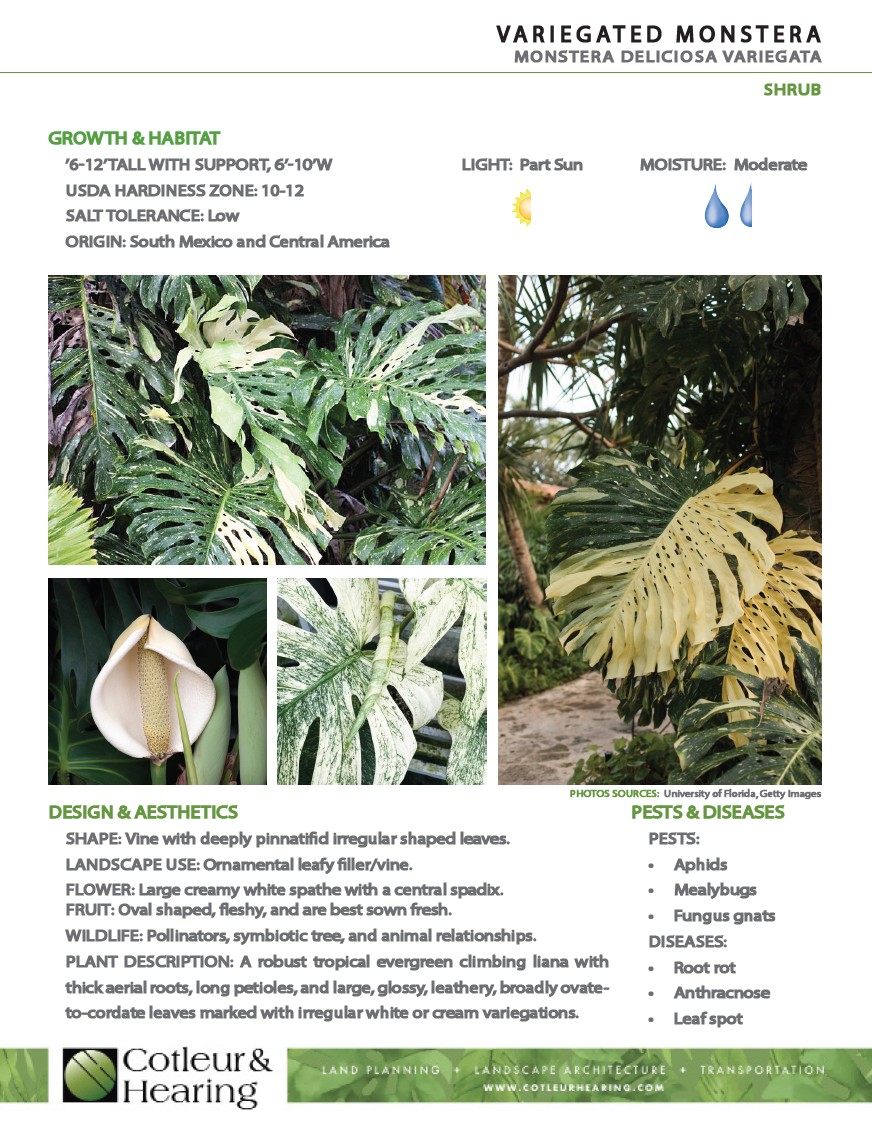
With its dramatic split foliage and striking patterns of white, cream, and green, the variegated Monstera is an exceptional tropical specimen that can thrive in South Florida when provided with bright, filtered light, warm temperatures, excellent drainage, and protection from environmental extremes.
Monstera deliciosa is a vigorous evergreen climbing liana native to the tropical forests of southern Mexico and Central America, where it grows beneath the tree canopy and climbs trunks using thick aerial roots. It is generally suited to USDA Hardiness Zones 10 through 12, making South Florida’s climate favorable for outdoor cultivation, although valuable variegated specimens should be protected whenever temperatures approach 45°F and may suffer severe foliage damage near freezing.
The plant grows best in warm conditions between approximately 65°F and 90°F, with high humidity, good air circulation, and bright indirect light or limited early-morning sun. Intense midday and afternoon sunlight should be avoided because the white portions of the foliage contain little chlorophyll and are especially vulnerable to bleaching and sunburn. A protected east- or northeast-facing patio, lanai, courtyard, or location beneath a high tree canopy is ideal, particularly where the plant is sheltered from strong winds and direct coastal salt spray.
Variegated Monstera grows best in a loose, organic, slightly acidic to neutral soil mix with excellent drainage and a pH between approximately 5.5 and 7.0. A blend of quality potting soil, orchid bark, perlite or pumice, and coco chips provides adequate moisture retention while maintaining the air space necessary for healthy root development. Heavy garden soils, dense peat-based mixes, and poorly drained containers should be avoided, as prolonged saturation during South Florida’s rainy season can quickly lead to root and stem rot.
Water thoroughly when the upper few inches of soil begin to dry, allowing excess water to drain freely. Supplemental irrigation should be reduced during periods of frequent summer rainfall. Providing a sturdy moss pole, wooden plank, or trellis supports the plant’s natural climbing habit and encourages the development of larger leaves with deeper divisions and more pronounced fenestrations.
Light applications of a balanced fertilizer during active growth can support healthy foliage, but excessive feeding may burn the roots or brown the delicate variegated tissue. Although the plant tolerates South Florida’s summer heat and humidity well, it benefits from protection during tropical storms, unusually cold nights, and periods of intense reflected heat. When these tips are followed the variegated Monstera can become a bold architectural accent in a protected South Florida garden.