Plant of the Month – September 2026
Staghorn Fern
Platycerium Bifurcatum
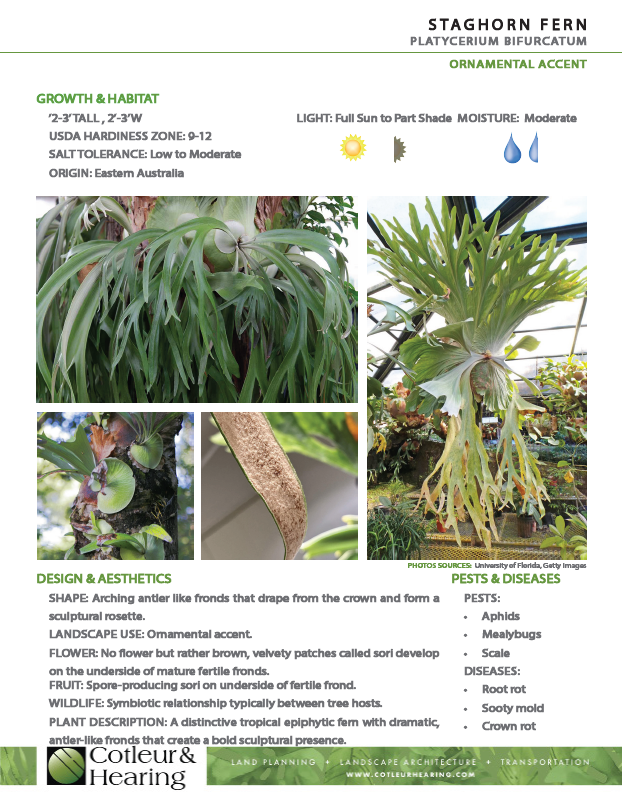
Looking more like a piece of living sculpture than a traditional fern, the Staghorn Fern brings a bold tropical character to the landscape. Native to eastern Australia, this unique epiphyte naturally grows high above the forest floor, anchoring itself to tree trunks and branches rather than growing in soil. Its distinctive, antler-shaped fertile fronds radiate outward to create a dramatic architectural display, while its rounded shield fronds hug the growing surface and help the plant collect moisture, fallen leaves, and organic debris. Mature specimens typically reach 2–3 feet in height and width, with established plants capable of growing substantially larger over time.
Well suited to USDA Hardiness Zones 9–12, the Staghorn Fern thrives in South Florida’s warm, humid environment and can remain an eye-catching feature throughout the year. It prefers bright, filtered light to partial shade, moderate moisture, and good air circulation, making it especially effective beneath tree canopies or in protected courtyards and outdoor living spaces. Rather than producing flowers or seeds, mature fertile fronds develop brown, spore-producing patches on their undersides, allowing the fern to reproduce much like its ancient relatives.
One of its most fascinating features is its ability to essentially create its own growing environment. As shield fronds collect organic material against the host surface, the material gradually decomposes and provides nutrients for future growth. This makes the Staghorn Fern an excellent example of how plants can adapt to life beyond the ground. Whether mounted on a specimen tree, incorporated into a shaded garden, or displayed against an architectural wall, the Staghorn Fern adds texture, dimension, and a living sculptural element that few other landscape plants can match.